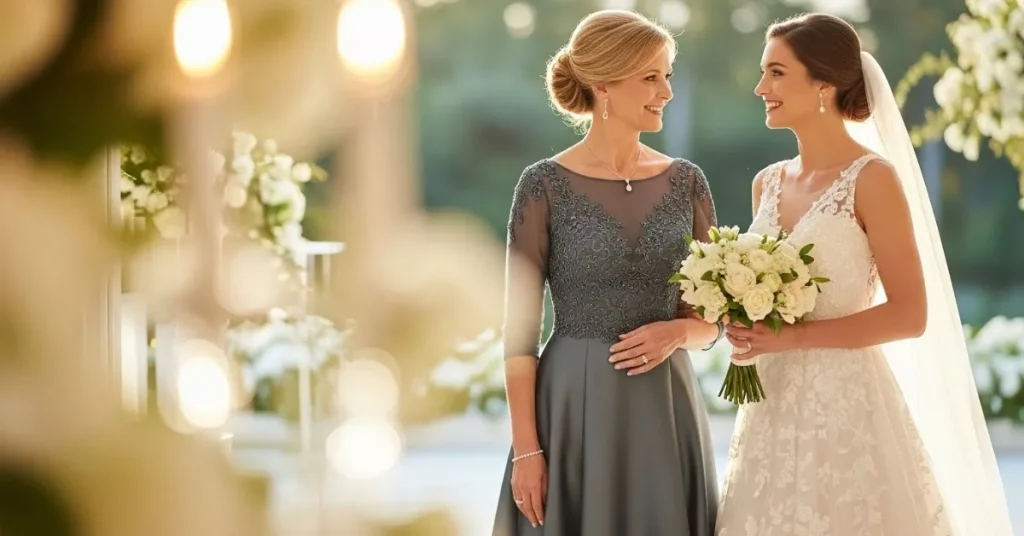
Finding formal dresses for mother of the bride can feel stressful when the goal is elegance without overspending. The good news is that polished, expensive-looking styles are not limited to luxury boutiques.
With the right fabrics, silhouettes, and small styling choices, many dresses can look refined and timeless. This guide focuses on realistic options that feel graceful, photograph well, and suit real weddings.
Each idea includes simple ways to keep costs controlled while still achieving a high-end appearance.
1. Classic A-Line Floor-Length Gown
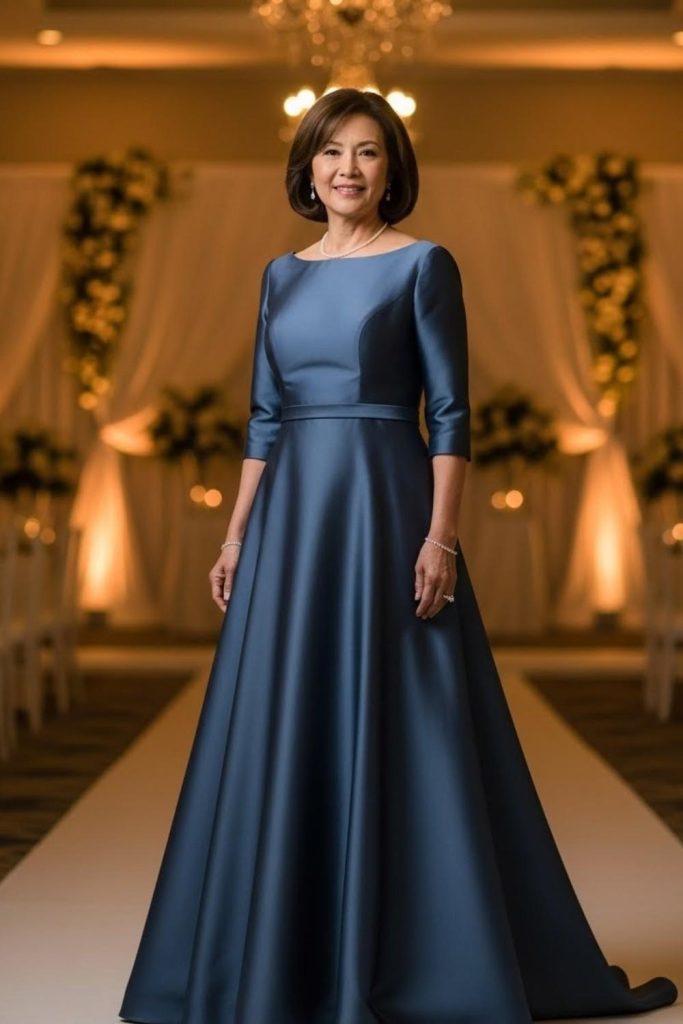
A classic A-line gown is one of the safest and most flattering choices. It creates balance without clinging and works well for many body shapes. Floor-length styles instantly read as formal, especially when paired with structured fabric.
Look for matte satin, chiffon, or crepe. These fabrics hang well and avoid shine that can look cheap in photos. To save money, skip heavy beadwork. Clean seams and good tailoring matter more.
A simple neckline like a scoop or soft V keeps the look refined. Neutral shades such as navy, champagne, or charcoal always look polished. DIY tailoring can make a big difference. Hemming the length and adjusting the waist creates a custom feel.
Pair the dress with low metallic heels and a small clutch. Keep jewelry simple. Pearl studs or a slim bracelet are enough. This style looks expensive because it stays calm and classic without extra details.
2. Structured Midi Dress With Long Sleeves
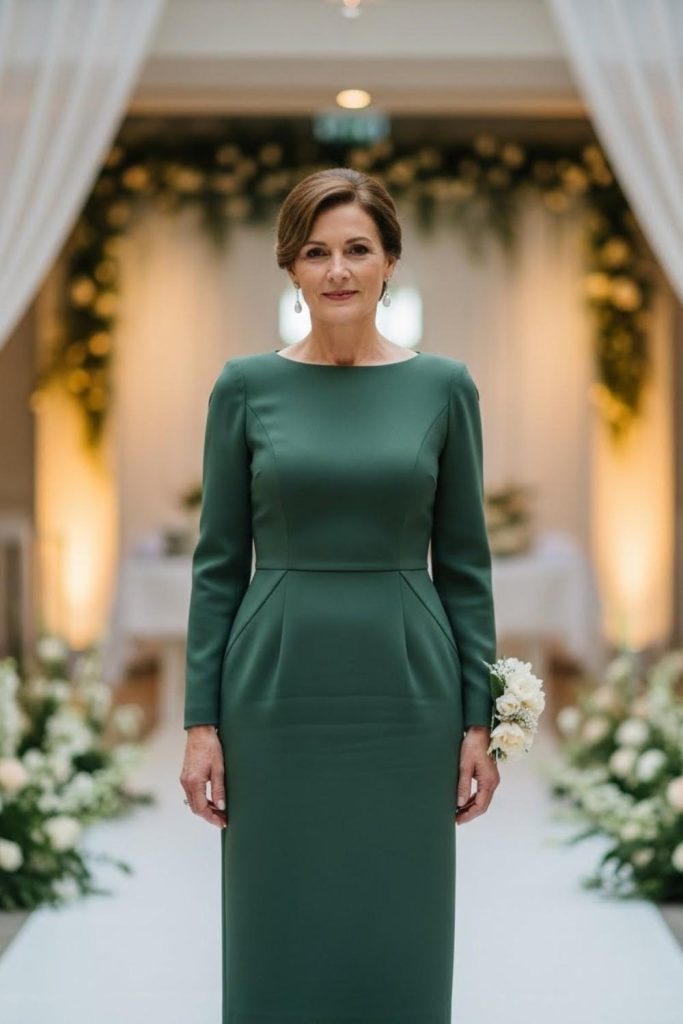
A structured midi dress offers polish without the formality of a gown. The key is shape. Look for darts, seams, or a defined waist. Long sleeves add grace and make the dress feel wedding-appropriate. This style works well for daytime or indoor ceremonies.
Fabrics like ponte knit or crepe hold their shape and resist wrinkles. Avoid thin jersey. A modest neckline keeps the look balanced. Jewel tones such as emerald or plum photograph beautifully and feel rich.
Budget tip: many workwear brands sell midi dresses that double as formalwear. Change the styling to fit the event. Add pointed-toe heels and a dressy clutch. A simple belt can sharpen the waist if needed.
If sleeves feel plain, choose subtle texture instead of embellishment. Ribbing or light pleats add interest without cost. This dress looks expensive because it fits well and feels intentional.
3. Chiffon Gown With Soft Cape Overlay
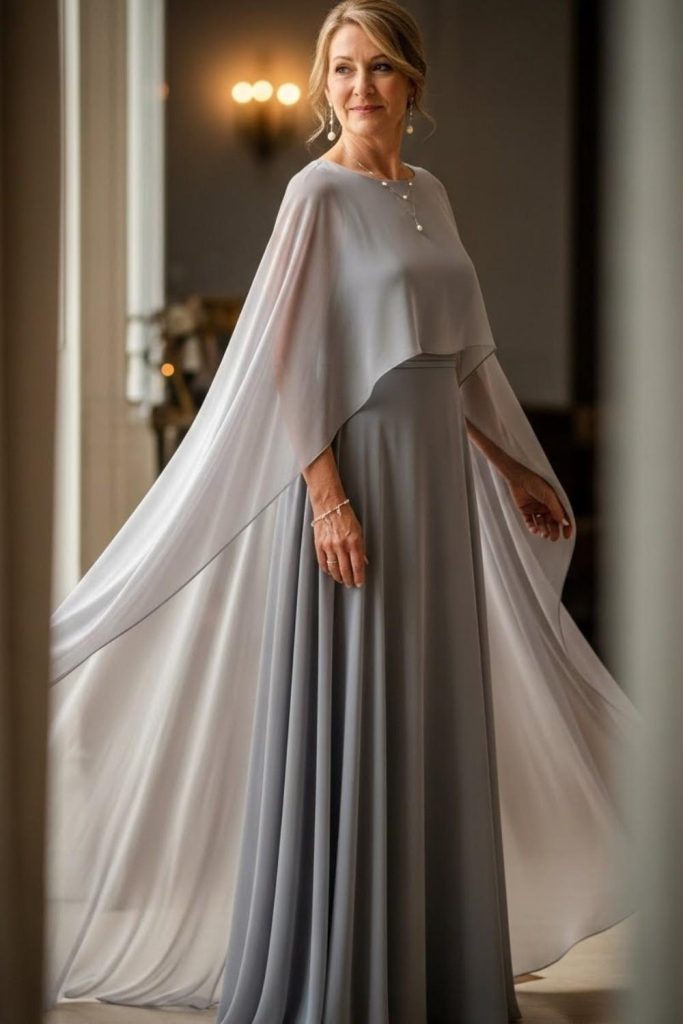
A chiffon gown with a cape overlay adds movement and coverage at the same time. The cape creates a layered effect that feels formal but light. This style works well for mothers who want arm coverage without heavy sleeves.
Choose chiffon that feels soft, not stiff. A solid color works better than prints for formal events. Dusty blue, mauve, or soft gray are strong options. The cape should fall smoothly over the shoulders and end around the elbow or waist.
To keep costs low, avoid sequins. Let the fabric do the work. A well-cut cape instantly adds drama. Many dresses already include this feature, saving the cost of a separate wrap.
Simple heels and a neat updo complete the look. This dress looks expensive because it flows naturally and adds dimension without heavy decoration.
4. Lace Evening Dress With Solid Lining
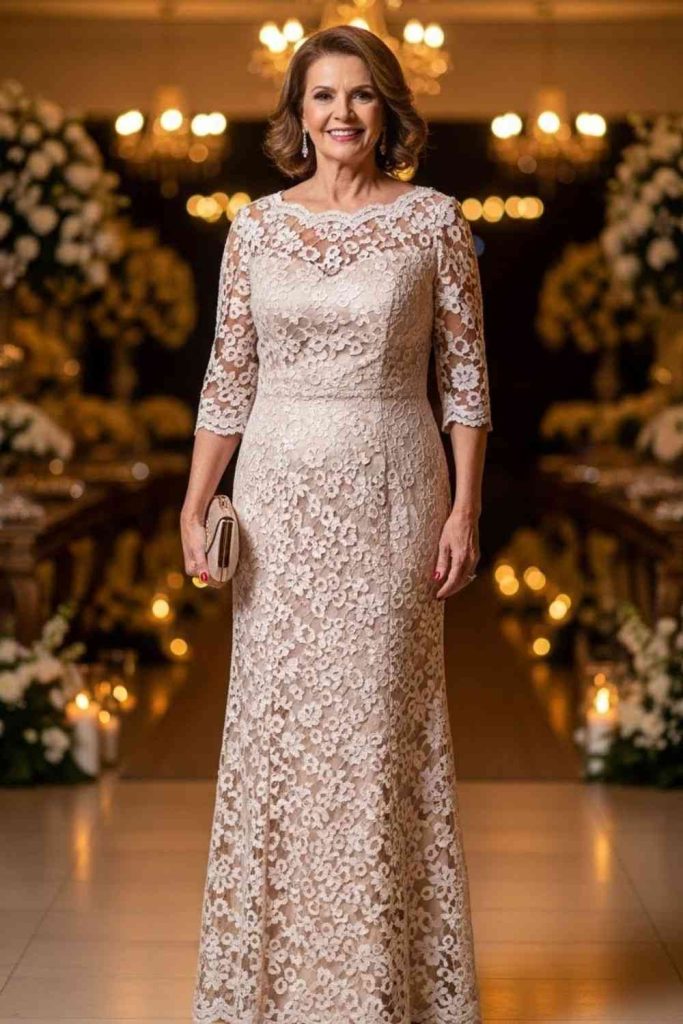
Lace always feels formal when done correctly. The secret is contrast. A solid lining under lace creates depth and avoids a see-through look. Choose lace with clean patterns rather than busy florals.
A fitted bodice with a gentle flare works best. Sleeves can be short or three-quarter length for comfort. Neutral tones such as taupe, slate, or soft gold look refined.
Budget tip: synthetic lace can still look good if the pattern is clean. Focus on fit. A simple lining upgrade from a tailor can improve structure.
Avoid heavy accessories. Let the lace stand on its own. Closed-toe heels and a smooth clutch keep things balanced. This style looks expensive because the texture adds interest without needing extra shine.
5. Satin Column Dress With Minimal Detail
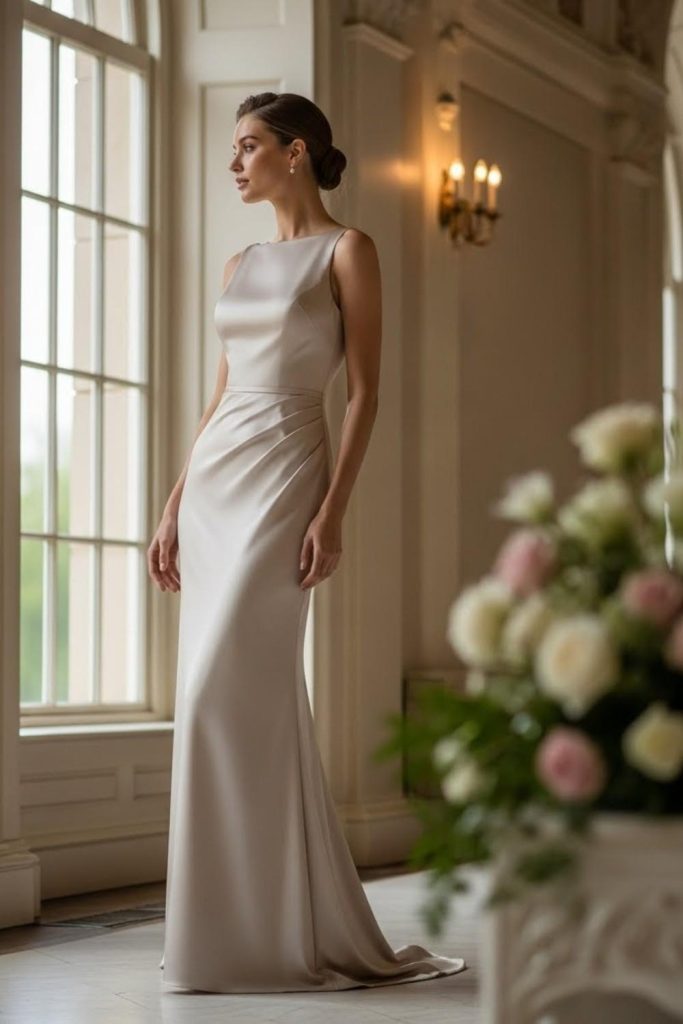
A satin column dress feels sleek and formal when styled simply. The straight shape creates a long line that photographs well. Look for thicker satin to avoid clinging.
Keep the design minimal. A bateau neckline or soft drape at the shoulder adds interest without excess. Neutral shades work best for this silhouette.
To save money, skip designer labels and invest in tailoring. Satin shows fit issues easily, so small adjustments matter. Nude or metallic heels keep the look light.
Hair and makeup should stay soft. This dress looks expensive because it relies on clean lines and controlled shine rather than decoration.
6. Tea-Length Dress With Flared Skirt
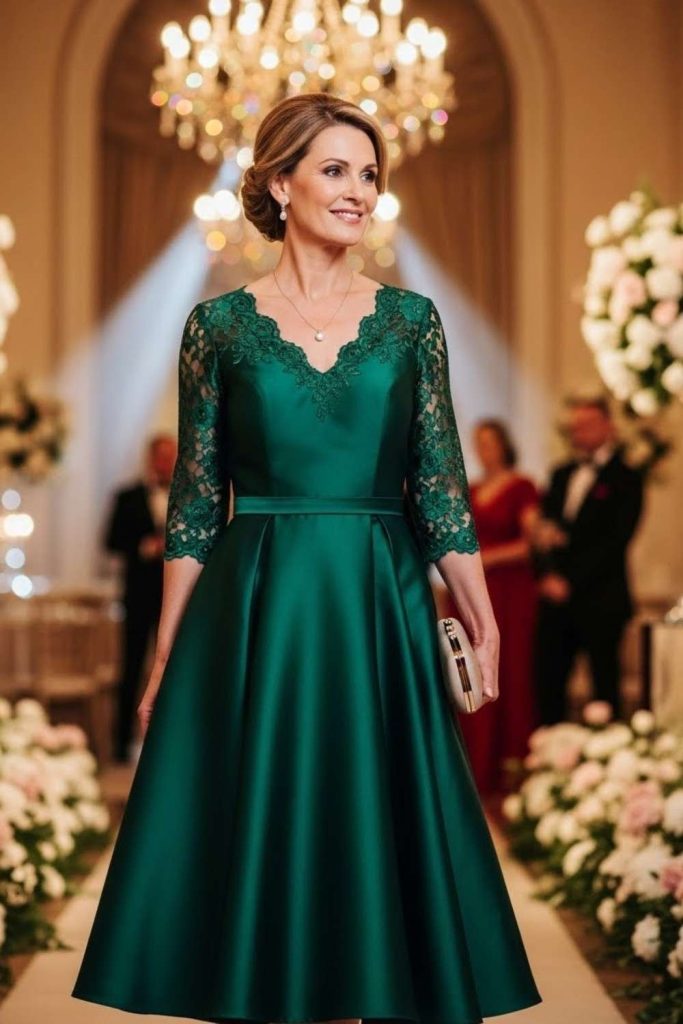
Tea-length dresses offer charm and comfort. The flared skirt creates movement without feeling heavy. This style works well for garden or daytime weddings.
Choose structured fabric like taffeta or heavy crepe. Avoid thin cotton blends. A fitted waist keeps the shape polished.
Budget-friendly tip: vintage-inspired dresses often cost less and feel special. Add classic heels and a small fascinator if appropriate.
This look feels expensive because it balances structure and softness while staying wedding-appropriate.
7. Embellished Bodice With Plain Skirt
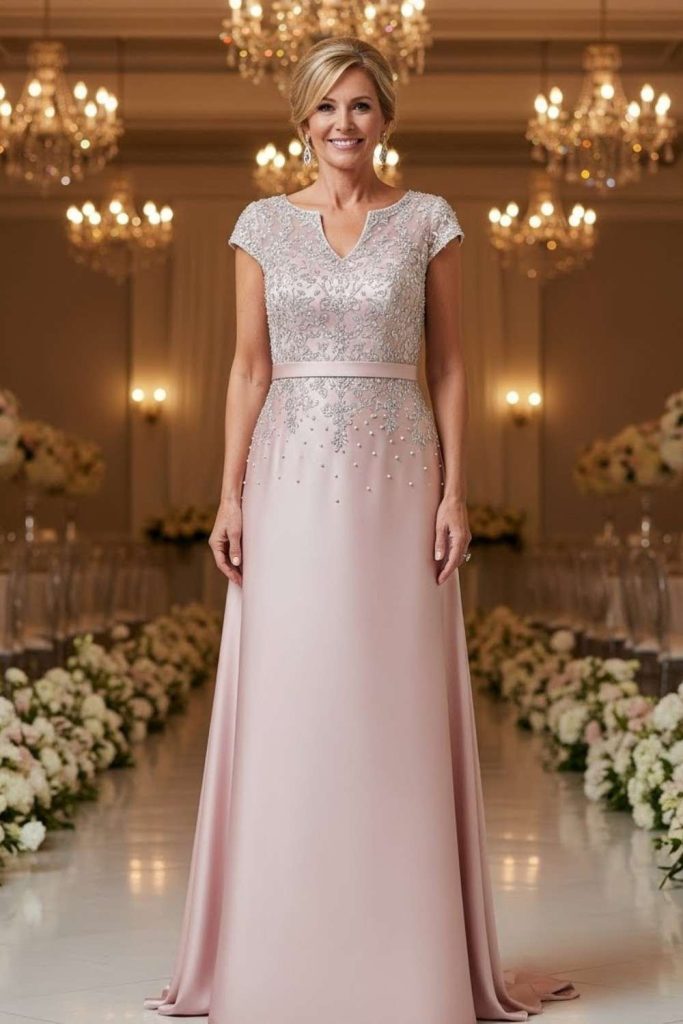
A dress with a decorated bodice and simple skirt draws attention upward. This creates a flattering effect and reduces the need for jewelry.
Keep embellishment light. Small beads or embroidery work better than heavy sparkle. The skirt should remain clean and fluid.
Budget tip: focus spending on the bodice area. That is where photos focus most. A plain skirt keeps costs down. This style looks expensive because the detail feels intentional and balanced.
8. Monochrome Gown With Clean Lines
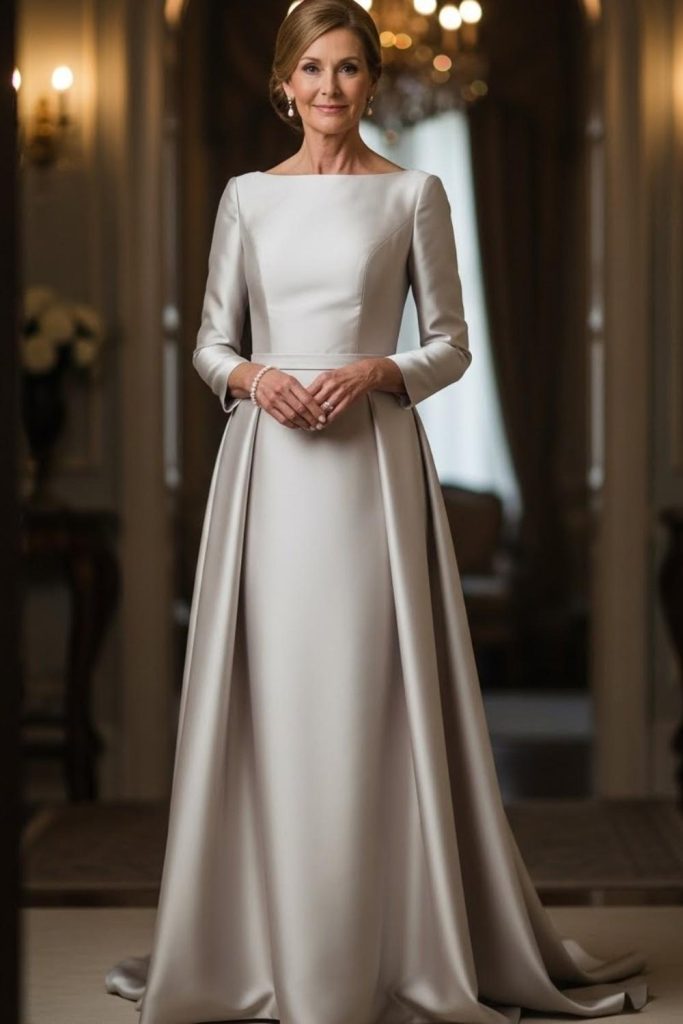
A monochrome gown creates a calm and polished look. Using one color from top to bottom helps the outfit feel intentional and well-planned. Shades like dove gray, champagne, or deep navy work well for formal settings.
The focus here is cut rather than decoration. Look for smooth fabric such as crepe or matte satin. Avoid loud textures. A simple neckline and fitted waist keep the silhouette sharp. This style works well for evening weddings and formal halls.
To keep costs down, skip added panels or beads. A single-tone dress already feels refined. Add interest with accessories instead. Metallic heels or a structured clutch bring contrast without overwhelming the look.
This dress looks expensive because it stays clean, balanced, and easy on the eyes in photos.
9. Wrap-Style Formal Dress
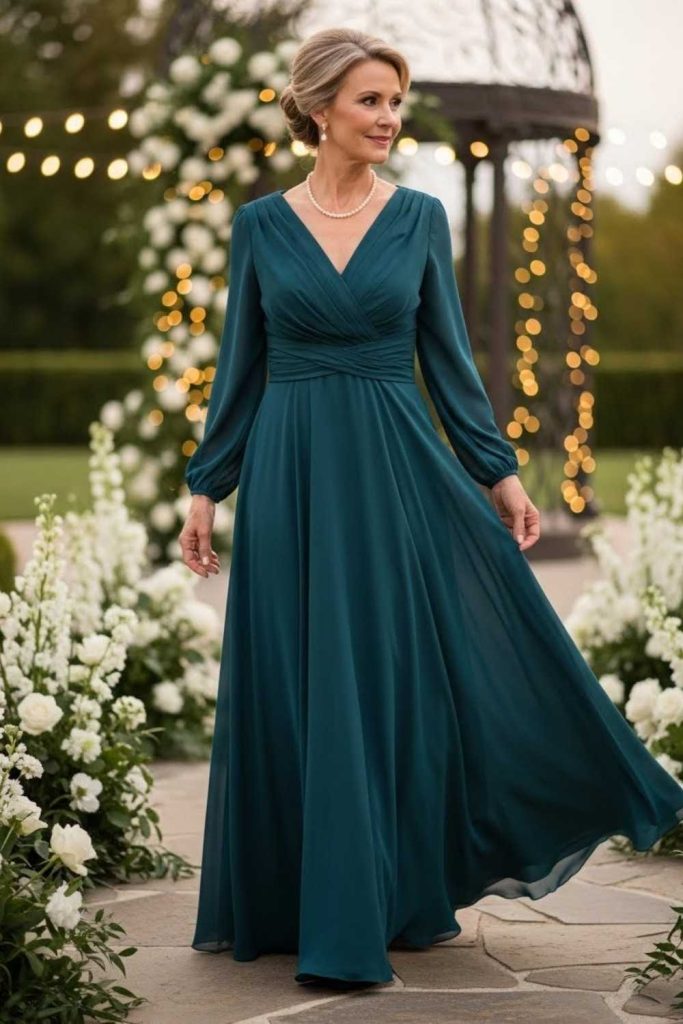
Wrap-style dresses work well for comfort and shape. They define the waist while allowing flexibility, which is helpful for long events. For a formal setting, choose a wrap dress made from heavier fabric like crepe or satin.
Avoid casual jersey versions. A floor-length or midi wrap with long sleeves feels more appropriate. Solid colors look better than prints for weddings.
Budget tip: many wrap dresses only need a secure inner stitch to sit perfectly. A small sewing fix can improve fit and confidence.
Pair with classic heels and minimal jewelry. This style looks expensive because the drape feels natural and flattering without stiff structure.
10. Pleated Maxi Dress in Soft Tones
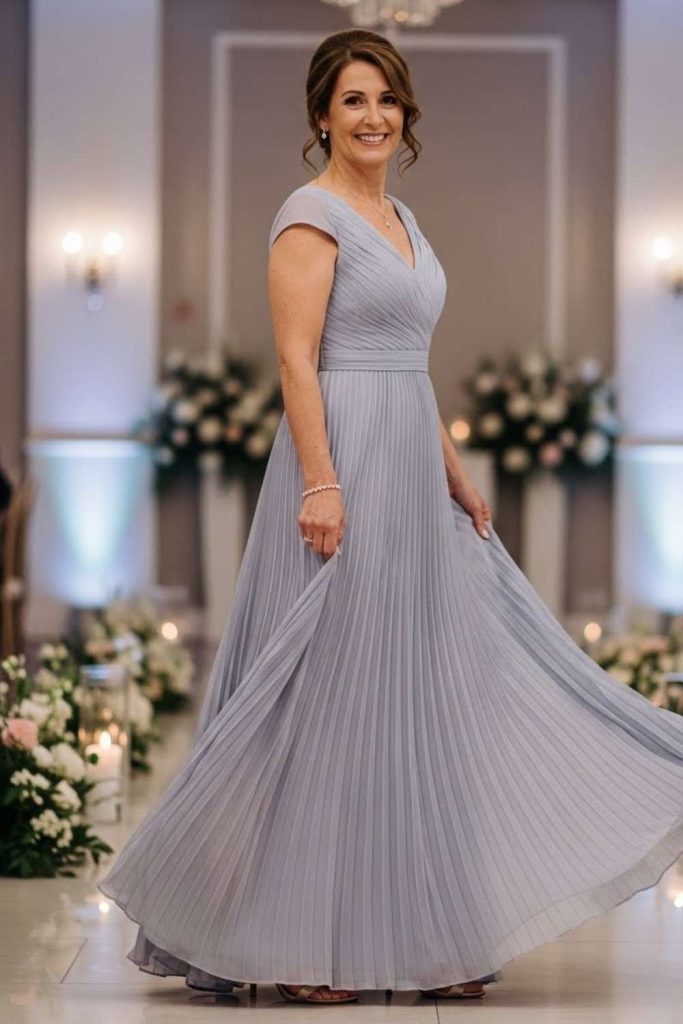
Pleated maxi dresses bring movement and grace. When done right, pleats add texture without bulk. Choose fine pleats rather than wide ones for a refined finish.
Soft tones like blush, powder blue, or muted lavender feel wedding-appropriate. The bodice should stay simple to balance the skirt.
To save money, focus on fabric quality over brand name. Even pleats and proper lining matter most. A light steam before the event makes a big difference.
Keep accessories understated. Let the pleats stand out. This dress looks expensive because it flows well and adds detail through fabric, not decoration.
11. Off-Shoulder Formal Dress With Support
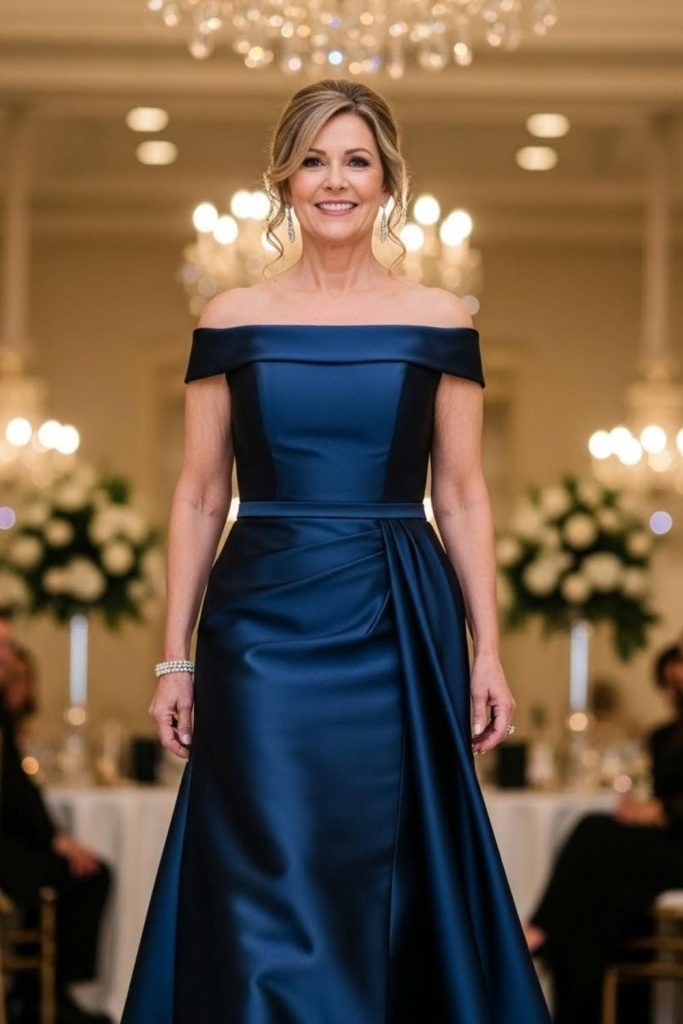
An off-shoulder dress can feel graceful when designed with structure. The neckline should sit securely and include inner support. This style highlights the shoulders without feeling flashy.
Choose thicker fabric to hold shape. A fitted bodice with a straight skirt works well. Neutral or jewel tones keep the look balanced.
Budget tip: avoid trendy cuts. Stick to classic off-shoulder shapes that age well in photos. A tailor can adjust elastic or lining for comfort.
This dress looks expensive because it balances softness and structure while staying tasteful.
12. High-Neck Gown With Subtle Texture
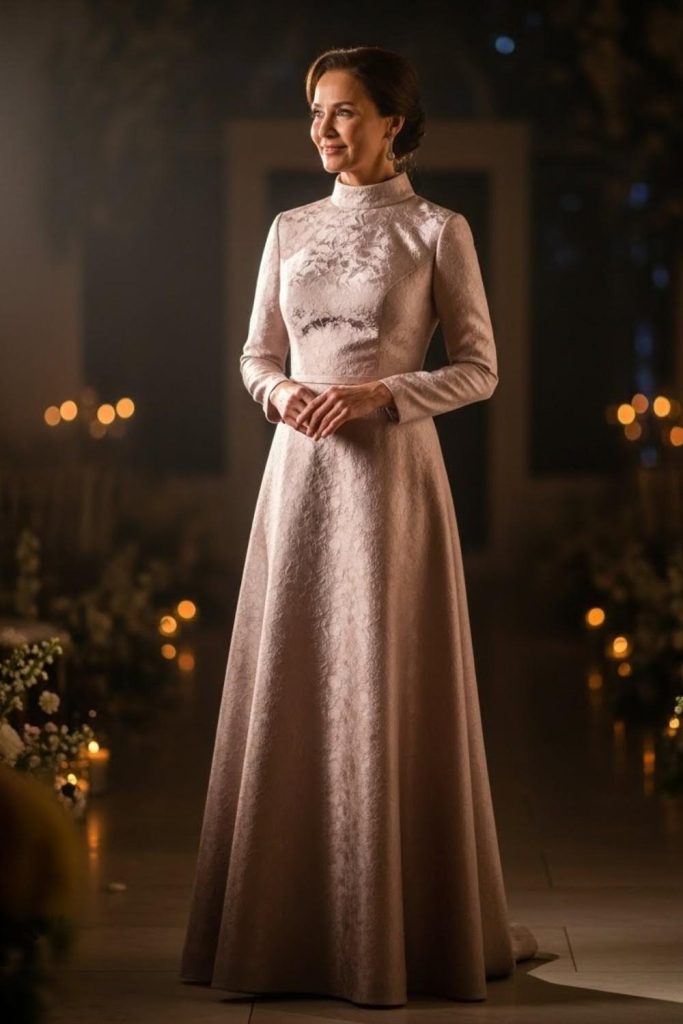
High-neck gowns feel refined and modest. Adding texture through fabric like jacquard or light embroidery keeps the look interesting without shine.
This style suits evening weddings and formal spaces. Long sleeves or capped shoulders add balance. Stick to darker tones for a formal feel.
Budget-friendly tip: texture replaces the need for jewelry. Skip statement pieces and focus on fit. This dress looks expensive because the fabric does the talking quietly.
13. Belted Formal Dress With Defined Waist
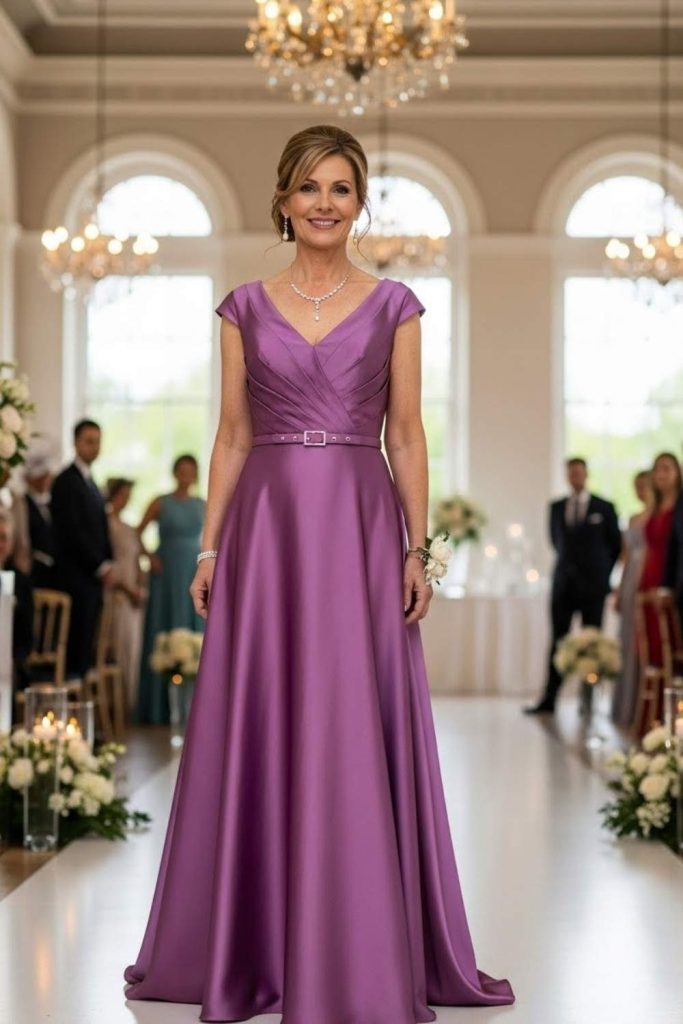
A belted formal dress creates shape instantly. The belt draws attention to the waist and gives structure to simple dresses. Choose a slim belt in matching or metallic tones.
The dress itself should stay clean. A-line or column shapes work best. Avoid bulky buckles. To save money, add a belt to an existing dress. This small change can completely shift the look.
This style looks expensive because it feels styled rather than plain.
14. Minimalist Gown With Statement Sleeves
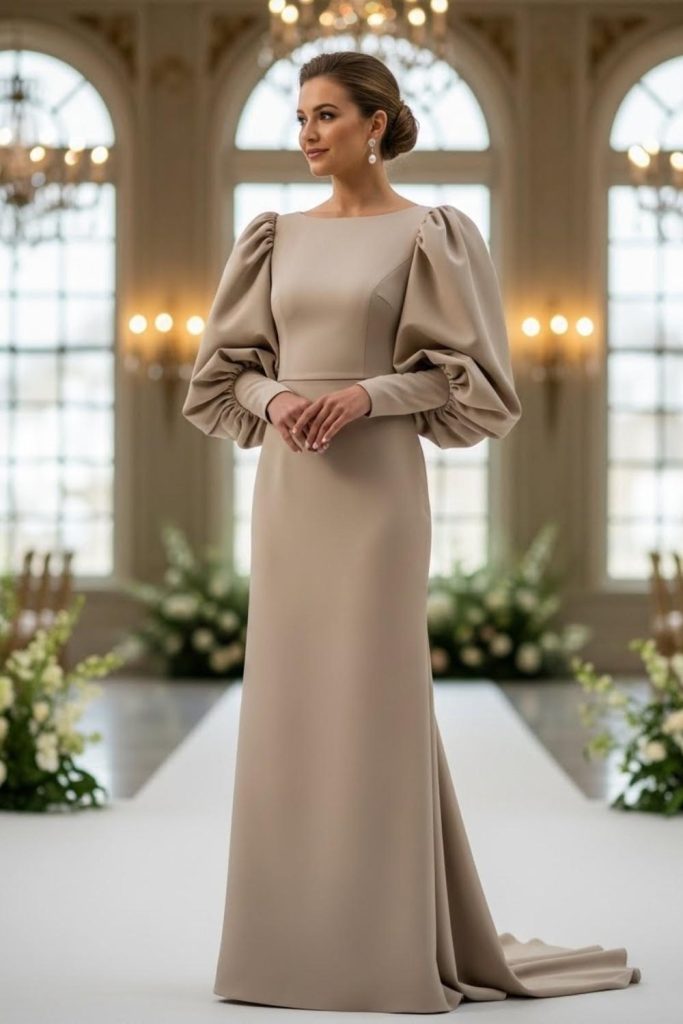
Statement sleeves add interest without heavy decoration. Think soft drape, gentle volume, or structured cuffs. Keep the rest of the dress simple.
Solid colors work best. Let the sleeves stand out naturally. Avoid added sparkle. Budget tip: sleeve detail often costs less than full embellishment. Focus spending there. This gown looks expensive because the design feels intentional and balanced.
Conclusion
Choosing formal dresses for mother of the bride becomes easier when you focus on fit, fabric, and simple styling. Clean shapes, thoughtful details, and small tailoring changes can create a polished look without overspending.
These ideas show that elegance often comes from restraint. Use this list as a guide to pick a dress that feels comfortable, photographs beautifully, and suits the wedding setting with confidence.